
Three Real Student Loan Situations, and What the Transition Rules Actually Do to Each One
Student Loans, Case Studies, Transition Rules
General rules are easy to misapply to a specific situation. Three real scenarios show how the current transition rules actually play out, and where borrowers commonly get the answer wrong.
Case One: The Borrower Who Left PAYE and Assumed the Door Was Shut
A borrower previously used PAYE, left the plan at some point, has no Direct Loan disbursement on or after July 1, 2026, and otherwise meets PAYE eligibility requirements. The instinct is to assume that leaving PAYE permanently closed the door.
It didn't. Under Federal Student Aid's July 2026 operational guidance, there's no general restriction on enrolling in PAYE on or after July 1, 2026 for an otherwise eligible borrower, unless that borrower has received a new Direct Loan disbursement on or after that date. This borrower can verify their loan dates, confirm their PAYE new-borrower status, and confirm current operational eligibility, and PAYE may still be an option.
The catch: PAYE remains temporary and ends no later than July 1, 2028. Re-entering PAYE without a plan for what happens after that sunset date just delays the real planning question instead of answering it.

Case Two: The Parent PLUS Consolidation Trying to Reach IBR
A parent borrower has a qualifying Direct Consolidation Loan that repaid Parent PLUS debt, disbursed before July 1, 2026. They haven't received a new Direct Loan since. The common assumption here is that ICR is the only PSLF-qualifying option available to them for the entire transition period.
That's not accurate either. The current transition pathway lets this borrower use ICR, and after making at least one qualifying ICR payment within the required transition period, the excepted consolidation loan can potentially move into IBR. Before recommending that move, an advisor needs to verify the consolidation disbursement date, confirm the qualifying ICR payment was actually made, confirm no disqualifying borrowing happened afterward, and confirm the move actually serves the borrower's PSLF or long-term forgiveness goal. ICR isn't a life sentence for this borrower. It's a bridge, but only if every condition along the way is documented and satisfied.
Case Three: The Borrower With 17 Years of IBR Credit Considering RAP
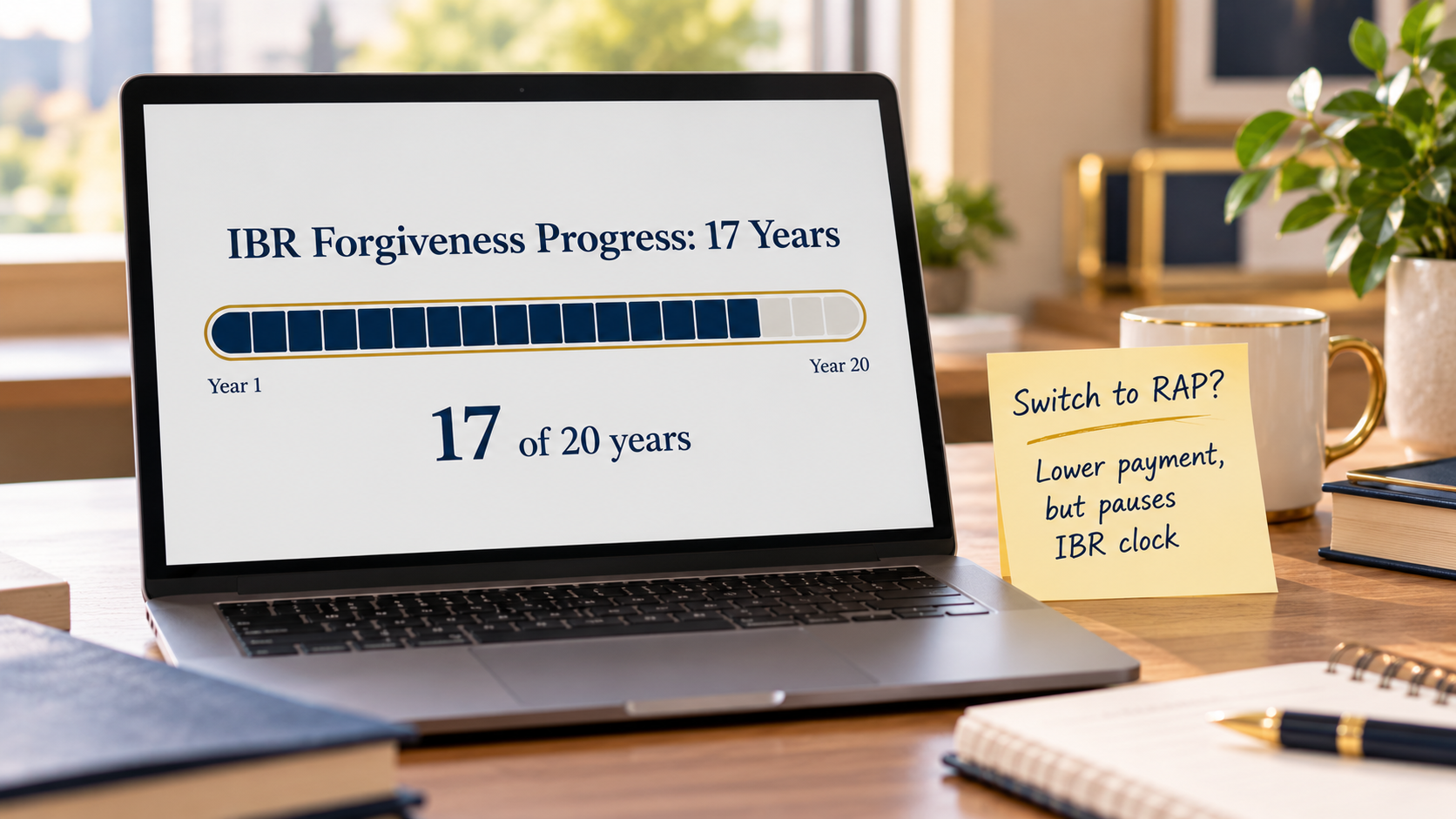
A borrower has accumulated 17 years of IBR credit and is going through a temporarily low-income year. RAP looks attractive because it would lower the current payment. On the surface, that seems like an easy win.
Here's what the low-income framing misses: RAP months don't count toward IBR forgiveness. A borrower this close to finishing an IBR forgiveness timeline who moves into RAP for a single low-income year isn't just accepting a temporary tradeoff. They're pausing progress on a clock they're close to finishing, in exchange for a lower bill during a period that may resolve on its own. For a borrower this deep into IBR credit, that tradeoff deserves real scrutiny before acting on it, not an automatic yes because the payment number looks smaller.
A Fourth Pattern Worth Naming: Waiting on REPAYE
A recurring situation that doesn't fit neatly into a single case: a borrower whose loans were affected by the SAVE plan's shutdown, still waiting for REPAYE to become available again. The right approach for this borrower is the same discipline as the three cases above. Plan around confirmed, currently operational options rather than waiting on a plan that regulations mention but that isn't actually available through your servicer today. Waiting on REPAYE isn't a plan. It's a delay, and delays have a cost during a transition window with a fixed end date.
What These Three Cases Have in Common
None of these situations have a one-line answer. Each one depends on specific facts: disbursement dates, payment records, existing forgiveness credit, and the borrower's actual long-term goal. A borrower or advisor who applies a general rule without checking these specifics can talk themselves out of an option that's actually still available, like Case One, or into a plan that quietly costs more than it saves, like Case Three.

Before You Apply Any of This to Your Own Situation
If you previously left PAYE, verify your current eligibility before assuming you can't go back
If you have Parent PLUS consolidation debt, confirm your disbursement date and payment history before assuming ICR is your only option
If you have significant existing IBR credit, treat a move to RAP as a real tradeoff decision, not just a lower bill
In every case, get your loan-level facts confirmed with your servicer before making a plan change based on a general rule you read somewhere
These three cases show the same lesson from three different angles: the transition rules reward borrowers who check their specific facts, and they punish borrowers who assume a general rule applies to them without checking first.
