PSLF Isn't Going Away. Your Repayment Plan Menu Is.
Student Loans, PSLF, Transition Planning
A lot of the news around student loan repayment plans sounds like an ending. PAYE is being phased out. ICR is being phased out. SAVE already shut down. If you're working toward Public Service Loan Forgiveness, it's reasonable to wonder if PSLF is next.
It isn't. PSLF is not ending because PAYE and ICR are being phased out as transition plans. What's changing is the menu of plans that can produce qualifying payments, not the program itself. That distinction matters more than it sounds like it should, because confusing the two can lead you to make a decision that actually does put your PSLF progress at risk.
The Real Risk Isn't PSLF Ending. It's a Payment That Doesn't Count.
A lower monthly payment that doesn't qualify for PSLF, or that creates uncertainty about whether your servicer processed it correctly, can be worse for you than a slightly higher payment that clearly counts. You're not just shopping for the lowest bill. You're trying to accumulate qualifying months toward 120. Every plan decision should get filtered through three questions: will this month count, will the plan remain available, and will the servicer process it correctly? The answer can differ across PAYE, ICR, IBR, RAP, and fixed repayment, and it can differ again before and after July 1, 2028.
Your Priority Depends on Where You Are in the 120
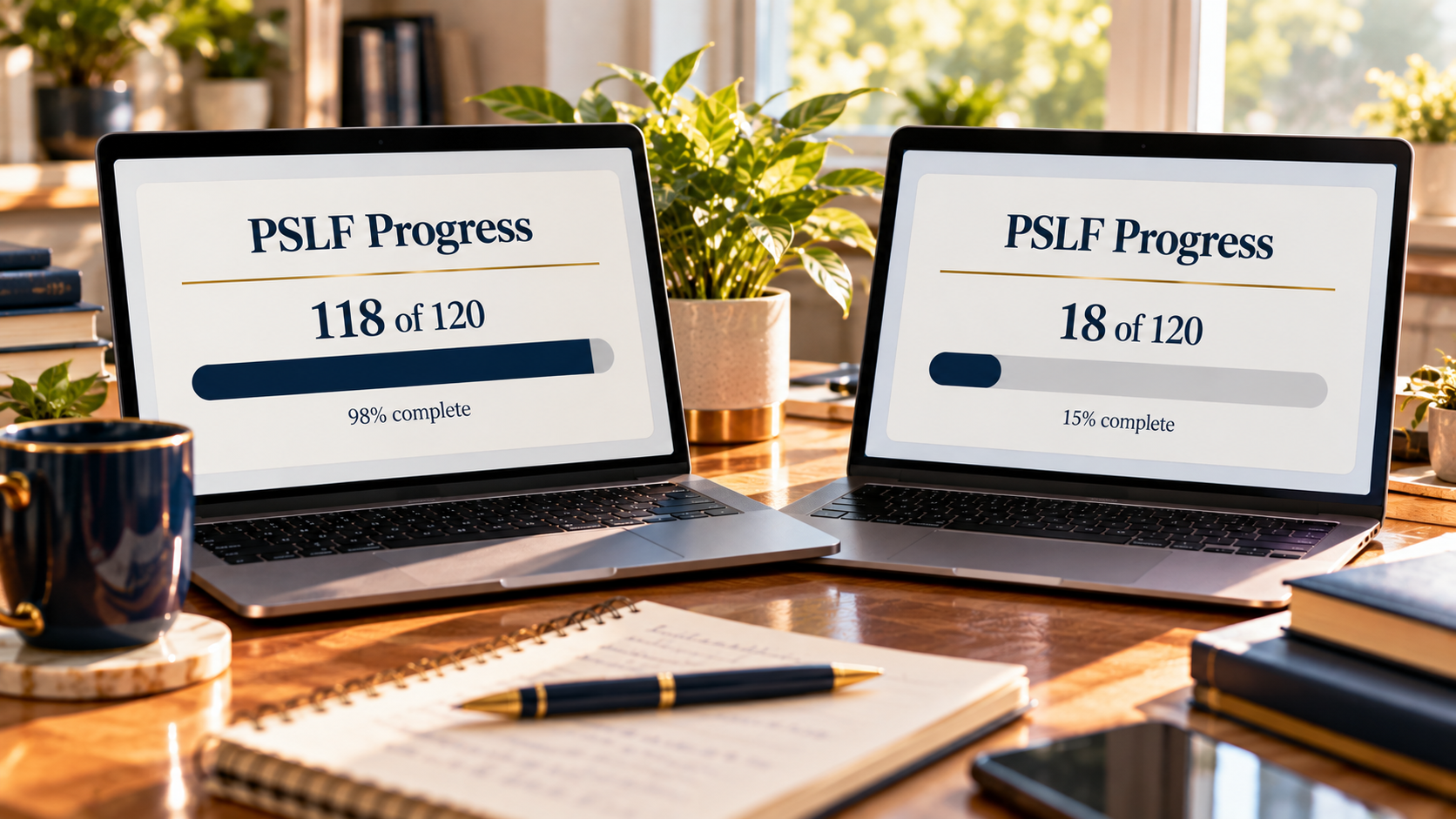
A borrower with 118 qualifying PSLF payments and a borrower with 18 qualifying payments are not making the same decision, even when they're both weighing the same plan change.
If you're close to 120, your priority is usually risk control. Preserving a clean, uninterrupted path to the finish line is often worth more than a lower bill for the next few months. A plan change that saves you money but introduces any uncertainty about whether the new payments qualify is a bad trade this close to the end.
If you're early in PSLF, your priority is different: you need a plan that's durable enough to survive the sunset of PAYE and ICR. A plan that works well for you today but disappears in 2028 isn't a real long-term strategy if you're only 18 payments in. Build around a plan you can stay in, or cleanly transition out of, well before the sunset date arrives.
RAP Can Count for PSLF. That Doesn't Make It Interchangeable With IBR.
Here's a nuance worth knowing if RAP is part of your plan: RAP can be a PSLF-qualifying plan when you make the required on-time payment. That's genuinely useful, especially for borrowers who'll be building PSLF credit after legacy plans are gone.
But don't collapse RAP and IBR into the same category just because both can support forgiveness goals. The same RAP month that counts toward your PSLF total does not count toward IBR forgiveness. If you're tracking both PSLF and a separate IBR forgiveness timeline, a RAP payment can advance one clock while doing nothing for the other. Know which clock you're actually trying to finish before you assume a RAP payment is doing double duty.
Build a Real Issue List Before You Change Anything
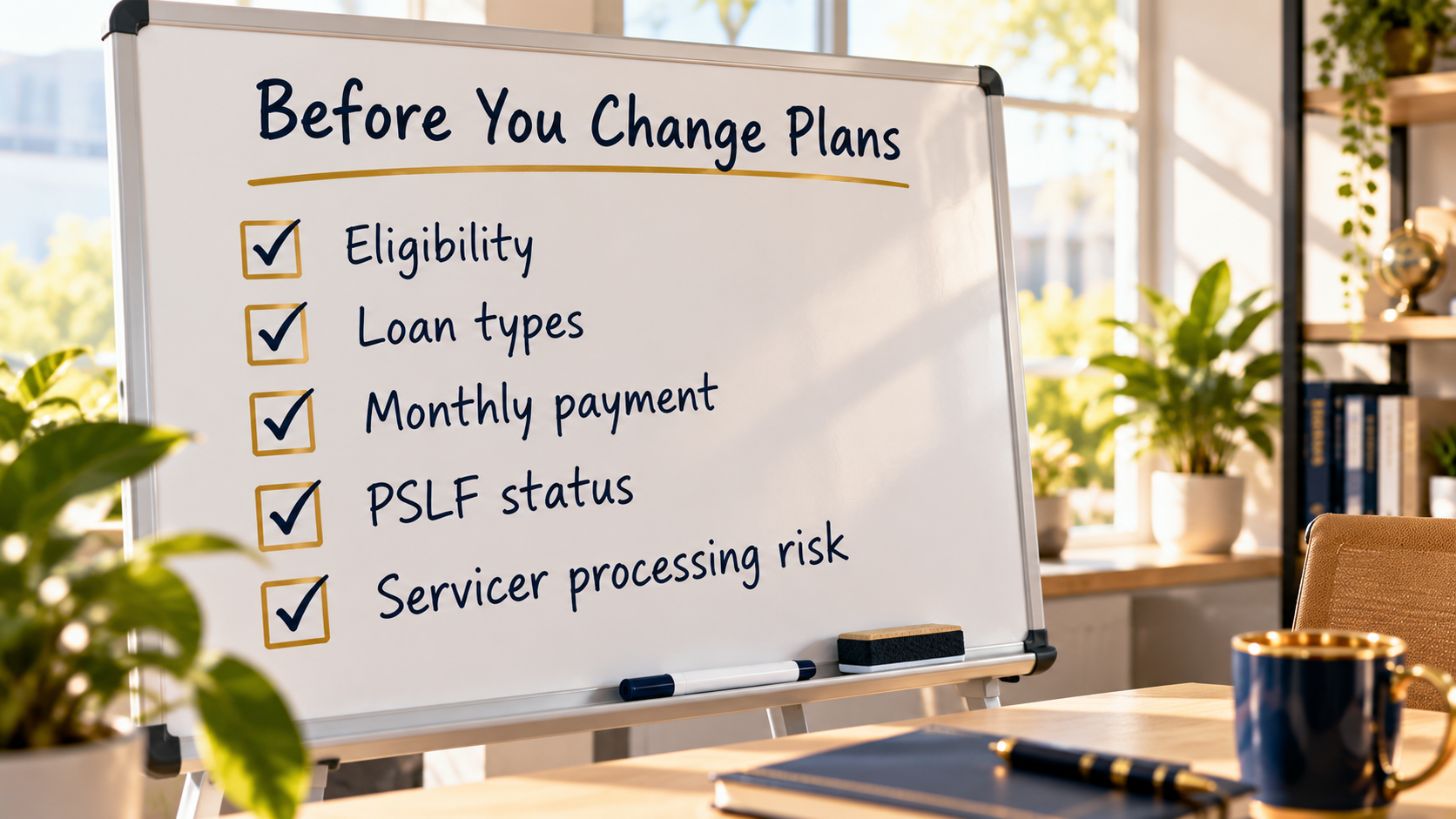
Borrowers often ask narrow questions because they don't know which facts actually matter. "Can I get a lower payment?" is really "will this lower payment interrupt the forgiveness path I'm trying to complete?" "Should I consolidate?" is really "when will this loan be disbursed, will it count as a post-July 1, 2026 Direct Loan, and what repayment choices will I have left afterward?"
Before recommending or accepting a plan change, work through the full list: your eligibility, your loan types, your monthly payment, how interest is treated, whether the payment counts toward forgiveness, your tax timing, your PSLF status, the application procedure, and the risk that your servicer processes it wrong. If you're married, add your tax filing status and how spousal income gets treated. If you have Parent PLUS loans, add your consolidation history. If you've taken or expect to take a Direct Loan on or after July 1, 2026, review your plan eligibility across your entire portfolio, not just the new loan.
Keep Your Own Proof
A borrower this close to forgiveness can't easily prove a transition right later if the record wasn't kept at the time. Save the application, the confirmation, servicer notices, billing statements, and your loan-level plan assignment as you go. If a servicer processing error shows up years from now, your own documentation is often the only way to fix it.

What This Means for You
PSLF isn't disappearing. The plans that feed it are changing shape, and that shape is shifting faster than it has in years. Whether you're 18 payments in or 118, the decision isn't "what's the lowest payment available." It's "what protects the payments I've already made and keeps the ones ahead of me counting." Get your loan history and PSLF status reviewed by a Certified Student Loan Professional before you make a plan change based on a lower number alone.
