
PAYE Enrollment Isn't Closed. Here's What Actually Controls It.
Student Loans, PAYE, Transition Rules
You've probably heard that PAYE has a closed enrollment window, and that leaving PAYE means you can never come back. Neither of those is accurate under current Federal Student Aid operational guidance.
Here's what actually controls PAYE access during the transition years, and why the payment cap matters more than the calendar.

What Federal Student Aid's Current Guidance Actually Says
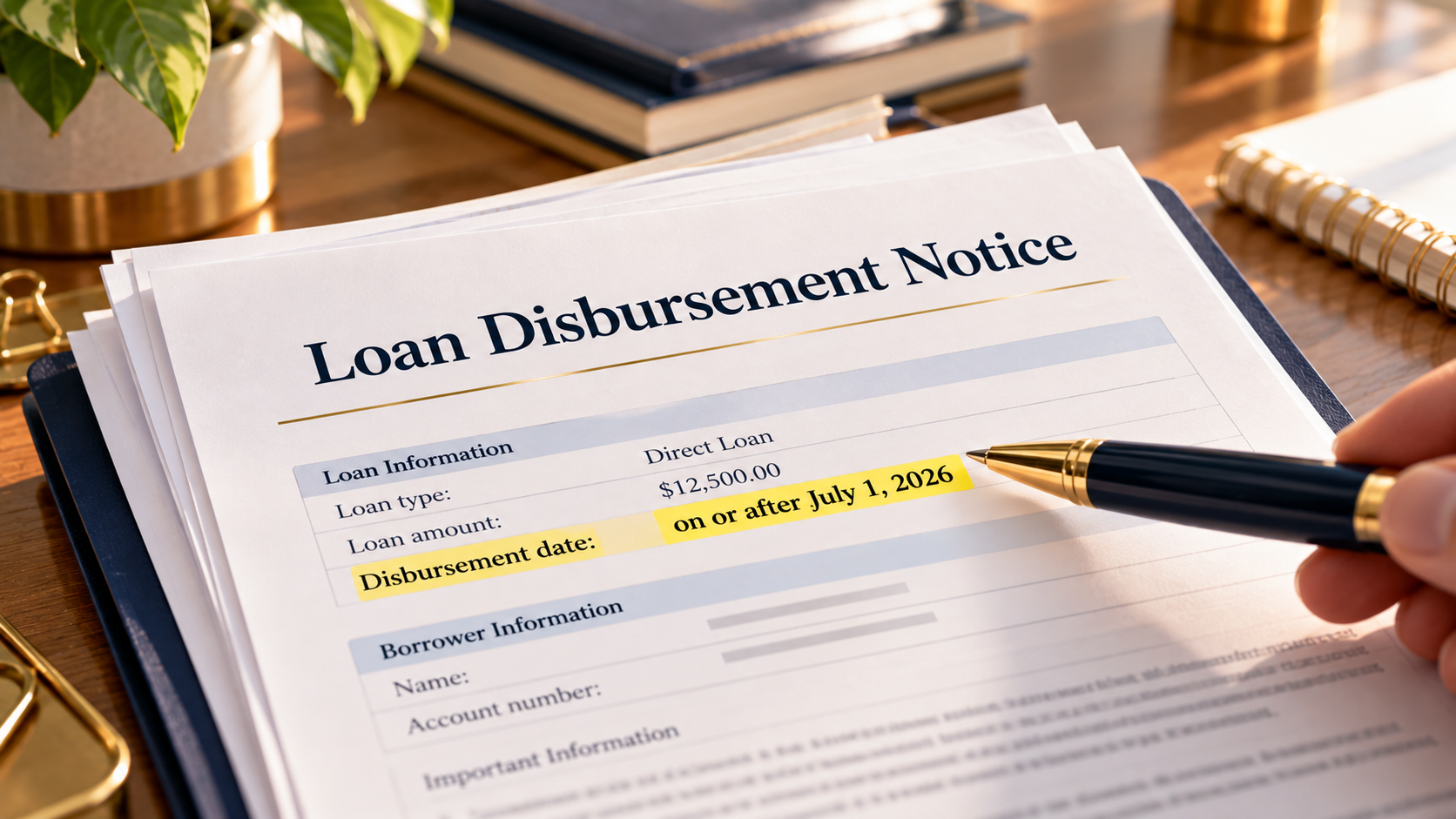
FSA's July 6, 2026 guidance states that if you otherwise meet PAYE eligibility requirements, there's no restriction on enrolling in PAYE on or after July 1, 2026. The one thing that changes your access: receiving a disbursement on a new Direct Loan on or after July 1, 2026. That triggers the borrower-wide repayment rule and can move you out of PAYE eligibility entirely.
PAYE itself remains a temporary plan. It ends no later than July 1, 2028. But July 1, 2024 and July 1, 2026 are not general closed-door PAYE enrollment deadlines, and leaving PAYE is not an automatic permanent bar to re-entry. If someone tells you otherwise, ask them where that came from. Guidance on this point has moved, and outdated advice is easy to repeat without knowing it's stale.
The Real Question Isn't the Calendar. It's the New Loan.
The date that matters for your PAYE access isn't a fixed deadline. It's whether you've taken, or plan to take, a new Direct Loan on or after July 1, 2026. That disbursement date is what can restrict your PAYE eligibility, not the plan's general enrollment window.
This is why a borrower planning to go back to school, take out a Parent PLUS loan, or consolidate should check the disbursement date before assuming PAYE is off the table or still open. The plan name doesn't answer the question. The disbursement date does.
The Payment Cap Is What Actually Protects You
PAYE's real value during the transition years is its payment cap, and this is where borrowers get tripped up the most.
Here's a real scenario: a borrower entered PAYE when their eligible balance was $180,000 and the 10-year standard payment at that time was about $2,000 a month. Years later, that borrower's income has grown enough that the 10% discretionary-income formula would calculate a $2,700 monthly payment. Under PAYE, that borrower still pays the original capped amount, not $2,700. The cap doesn't reset based on your current income or balance. It's set once, at PAYE entry, based on what the 10-year standard payment was back then.
If you leave PAYE for a temporary lower payment under RAP or a fixed plan, don't assume you can walk back into that same cap automatically, and don't assume you're permanently locked out either. Recheck your PAYE eligibility under current guidance before you decide. The cap is valuable enough that leaving it casually, for a single lower-payment year, can cost you more than it saves.
PAYE Payments Can Still Count Toward IBR Forgiveness
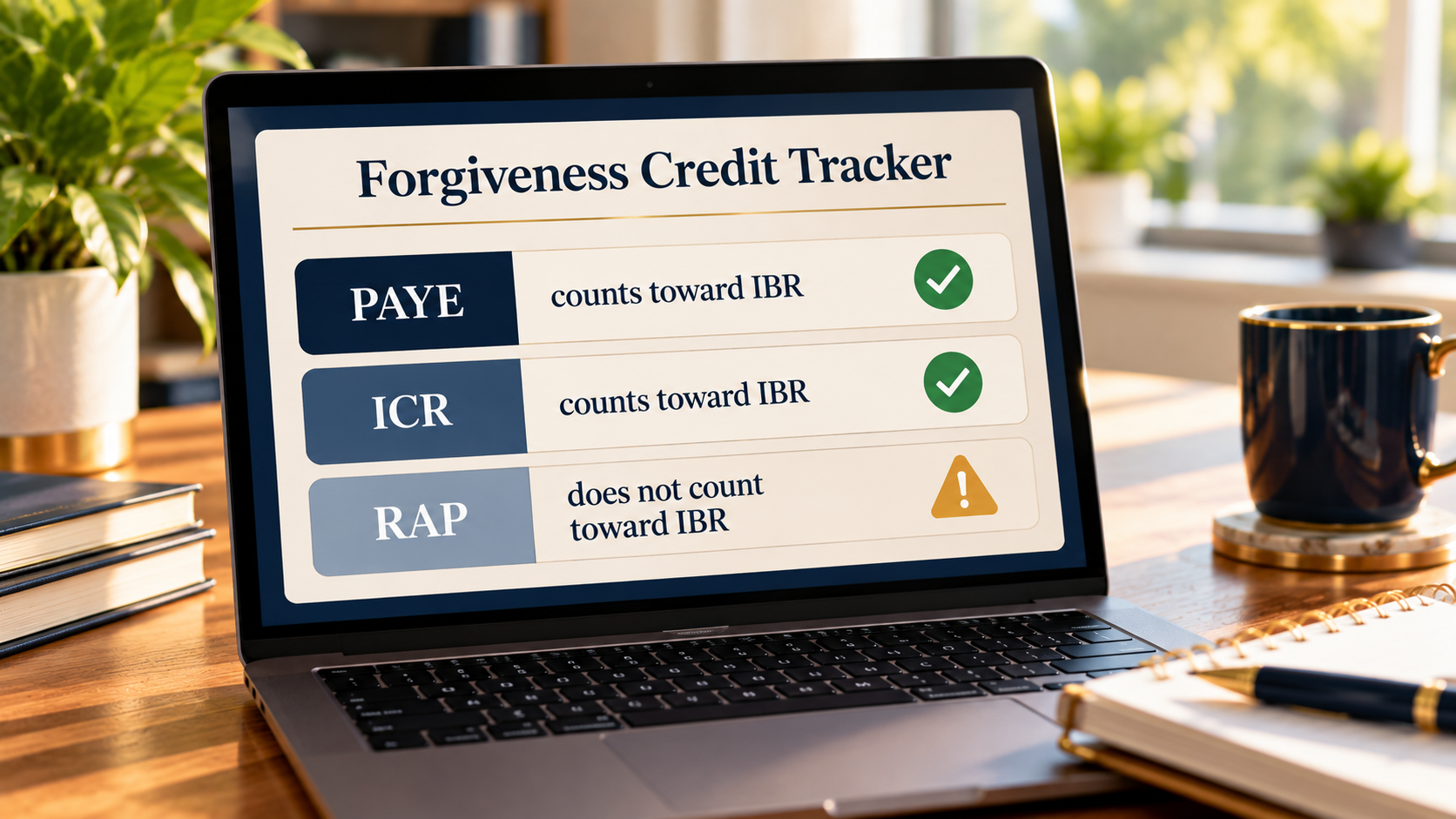
Here's a correction worth knowing if you've read older material on this: qualifying payments made under PAYE or ICR can be creditable toward the IBR forgiveness timeline under the transition rules. PAYE payments don't categorically fail to count toward IBR.
The asymmetry to watch is RAP, not PAYE. RAP months do not count toward IBR forgiveness, while qualifying legacy-plan payments, including PAYE, may count toward RAP forgiveness. If you're moving between plans and trying to track your forgiveness clock, RAP is the one that can quietly cost you credit. PAYE isn't.
What This Means If You're Close to PSLF
If you're pursuing Public Service Loan Forgiveness, the calendar math is different from the 20-year PAYE cancellation math. A borrower with 112 qualifying PSLF payments should be evaluated differently than a borrower with 12. Your priority isn't whether PAYE eventually forgives your balance on its own timeline. It's whether your current plan keeps producing qualifying PSLF payments without interruption.
Don't let a decision about the PAYE payment cap distract from the PSLF question. They're related, but they're not the same evaluation, and confusing them can cost you certainty on the path you're actually counting on.
What to Confirm Before You Make a Move
Before you leave PAYE, try to re-enter it, or assume it's closed to you:
Confirm whether you've taken or will take a new Direct Loan disbursement on or after July 1, 2026
Get your PAYE-entry cap baseline in writing, not a recalculated current-balance estimate
Check whether your goal is the PAYE 20-year cancellation or PSLF, since the math and the priorities differ
Verify your current eligibility with FSA or your servicer before assuming either permanent exclusion or automatic return
Keep your PAYE application, servicer notices, and payment records, since a transition-era eligibility dispute is easier to resolve with documentation than without it
PAYE during the transition years rewards borrowers who check the actual current guidance instead of the version of the rule they read six months ago. Talk to a Certified Student Loan Professional before you assume PAYE is closed, or that leaving it is a decision you can't undo.
